





 配送


Dissolution of the State: Perestroika and the End of the Soviet Uni的詳細資訊
* {
box-sizing: border-box
}
._spec_div h2 {
border: none;
color: inherit;
line-height: inherit;
margin: 0;
padding: 0;
font-size: inherit;
font-family: inherit;
background: none;
outline: none;
box-shadow: none;
text-shadow: none;
text-align: left;
}
._spec_div h2:before,
._spec_div h2:after {
display: none;
}
._spec_div {
border: 1px solid;
padding: 10px 20px 10px 20px;
margin: 3px;
}
._spec_map,
._spec_item {
display: flex;
flex-wrap: wrap;
line-height: 20px;
background-color: white;
word-break: normal;
}
._spec_item {
padding: px;
}
._spec_item .name {
padding-right: 12px;
flex: 0 0 35%;
}
._spec_item .value {
padding-right: 6px;
flex: 1 0;
}
._spec_d_50 {
flex: 0 0 50%
}
._condition_spec {
margin: 10px;
border: 1px solid #ccc;
padding: 5px 10px;
background-color: #fffeee;
background-clip: padding-box;
}
._condition_spec_row {
flex: 0 0 100%;
}
._condition_spec div {
background-color: #fffeee;
background-clip: padding-box;
}
._condition_spec .name {
padding-right: 12px;
flex: 0 0 15%;
}
@media screen and (max-width: 767px) {
._spec_m_100 {
flex: 0 0 100%;
margin-top: 12px;
}
._condition_spec .name {
padding-right: 12px;
flex: 0 0 30%;
}
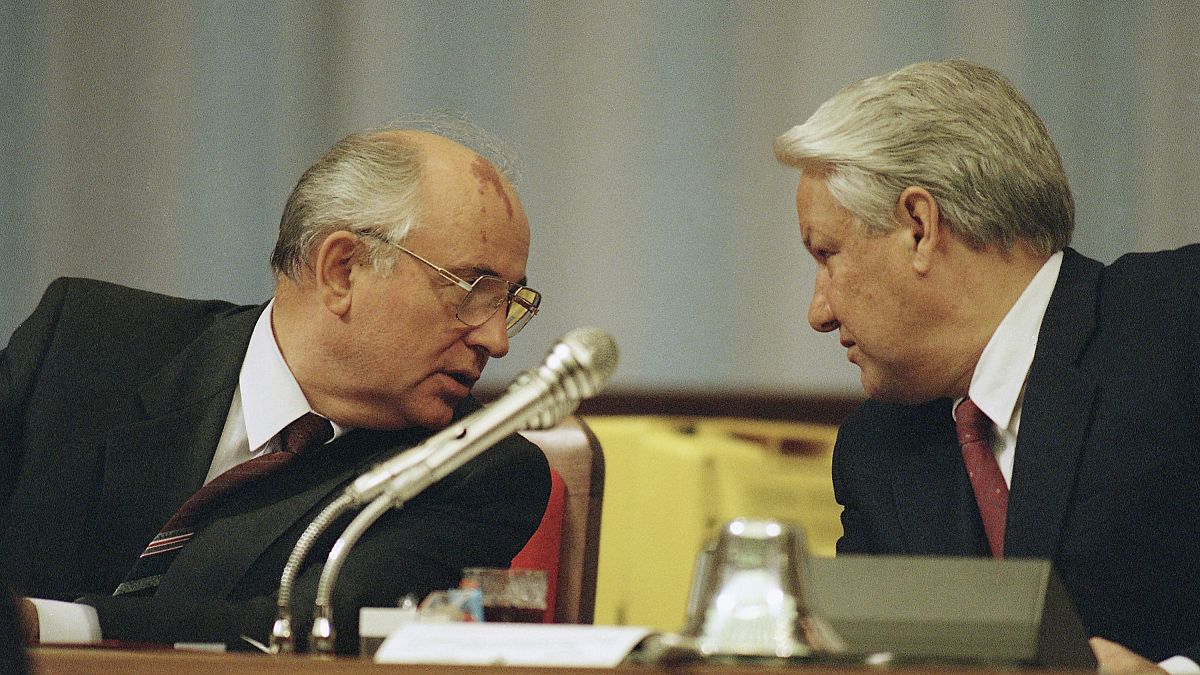
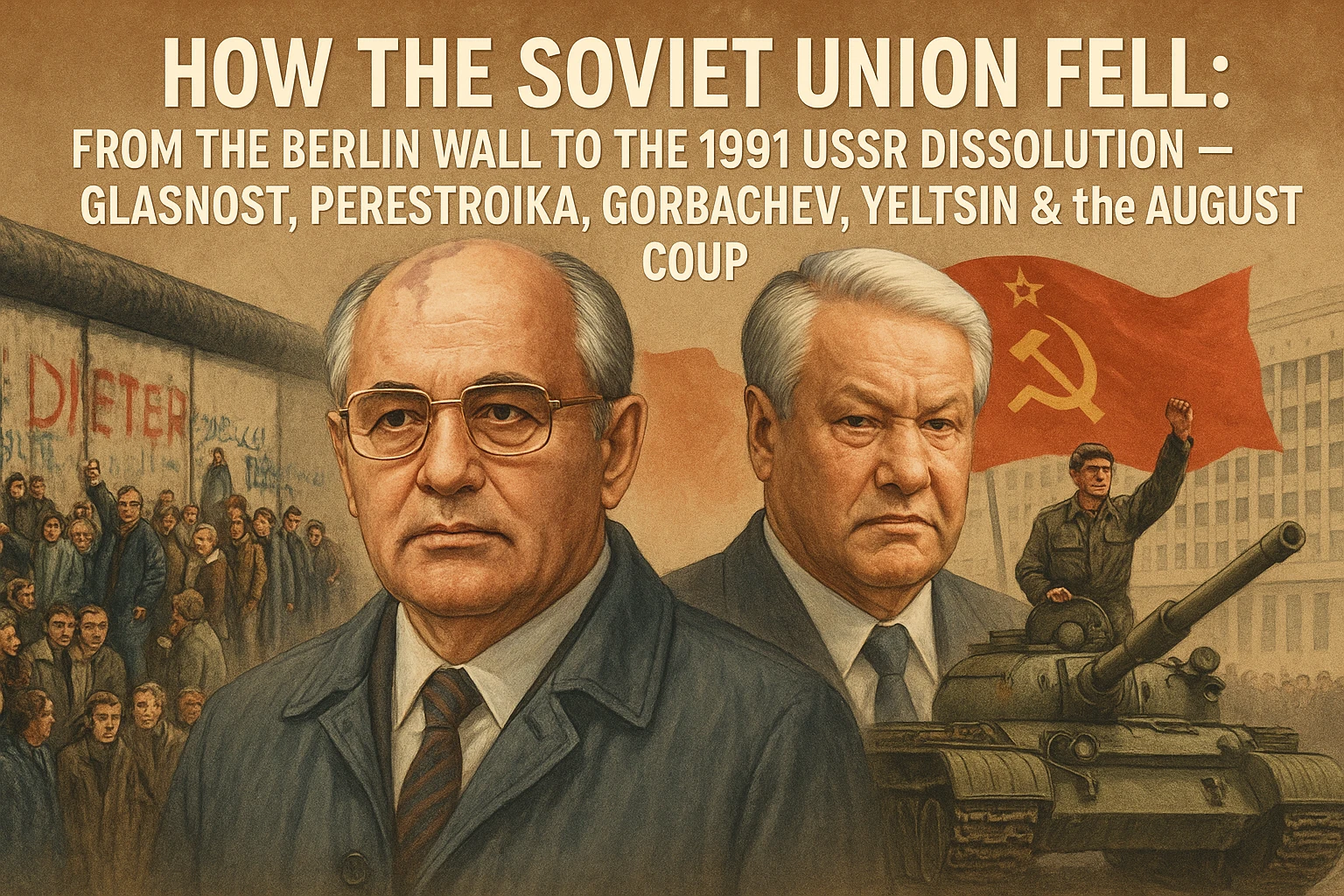
}Item specificsCondition:Like NewSeller Note:Pre-Owned (Like New)ISBN:9784130362825Author:Nobuaki ShiokawaBook Title:Nobuaki ShiokawaLanguage:JapanesePublisher:University of Tokyo PressFormat:BookGenre:Society and politics, Russian historyNumber of Pages:2426Publication Date:2021/02Country of Origin:Japan .change-background-color h2:before { background: rgb(255, 241, 0)!important; } .change-text-color h2:before { color: rgb(255, 241, 0)!important; } .change-border-color h2:before { background-image: linear-gradient(to right, rgb(255, 241, 0), rgb(255, 241, 0) 6px, transparent 5px, transparent 15px)!important; } .change-triangle-color h2:before { border-color: rgb(255, 241, 0) transparent transparent transparent!important; } .template__main table tr:first-of-type { background: rgb(255, 241, 0)!important; color: black!important; } .template__main.main6 h2, .template__main.main1 h2 { color: #000; } .template__main { word-break: break-word; width: 100%; background: #fff; border: 1px solid #000; padding: 0 20px 30px 20px !important; -webkit-box-sizing: border-box; box-sizing: border-box; word-break: break-all; } .template__main h1 { font-family: \"Verdana\", sans-serif, sans-serif!important; font-weight: bold; font-size: 22px !important; margin: 30px 0; text-align: center; color: #111; word-break: break-word; } .template__main h2 { font-family: \"Verdana\", sans-serif, sans-serif!important; margin: 0 0 15px 0; font-size: 18px; line-height: 1.2; text-align: left; word-break: break-word; } .template__main h3 { margin: 0; padding-left: 10px; font-size: 14px; color: #111; word-break: break-word; } .template__main .main__table { font-family: \"Verdana\", sans-serif, sans-serif!important; width: auto; padding-left: 50px; padding-bottom: 40px; } .template__main .main__table h3 { margin: 0; padding: 0 0 10px 0; font-size: 14px; color: #111; text-align: center; word-wrap: break-word; word-break: break-word; } .template__main .main__table table th { text-align: left; font-weight: bold; } .template__main .product_dec { margin: 0; padding: 0 0 20px 0; color: #111; text-align: left; } .template__main .product__intro { line-height: 24px; font-size: 14px; padding: 0 30px 20px; } .template__main .product__intro ol { margin: 0; padding: 0; } .template__main .product__intro ol li { font-family: \"Verdana\", sans-serif, sans-serif!important; list-style-type: disc; font-size: 14px; word-break: break-word; color: #111; } .template__main p { word-break: break-word; font-family: \"Verdana\", sans-serif, sans-serif!important; margin: 0; padding: 0 10px 20px; color: #111; text-align: left; line-height: 24px; font-size: 14px; } .template__main table { border-collapse: separate; border-spacing: revert; width: 100%!important; font-size: 14px; } .template__main table tr { background-color: #eee; color: #111; } .template__main table tr:first-of-type { background-color: #FFF100; color: #111; } .template__main table th, .template__main table td { font-family: \"Verdana\", sans-serif, sans-serif!important; padding: 0.5em 0 0.5em 0.5em; word-break: break-word; } .template__main h3 { padding-bottom: 10px; font-weight: bold; font-family: \"Verdana\", sans-serif, sans-serif!important; } .aside__item:not(:last-of-type) { padding-bottom: 20px; } .template__main section { padding-bottom: 20px; } .template__main .img-area { text-align: center; } .template__main img { max-width: 100%; object-fiv: cover; } .template__main h2 { position: relative; color: #111; padding: 10px 10px; border-radius: 5px; } .template__main h2::before { position: absolute; content: \"\"; width: 100%; height: 3px; left: 0; bottom: 0; background-color: #FFF100; border-radius: 3px; } General Description Why did great powers disappear?A detailed depiction of the collapse of the superpower, the Soviet Union, in just seven years.A new book written by a leading researcher in Russian history.In December 1991, the Soviet Union disappeared. This film provides a historical account of this important incident in which a unique power that was at the center of the Cold War underwent a reform called perestroika, leading to its dissolution. This book provides a detailed analysis of the twists and turns that led to the independence of 15 republics, and attempts to provide a comprehensive analysis of the end brought about by complex interrelationships. A compilation by a leading contemporary historical researcher.[Features of this book]●By providing a multi-layered depiction of the intentions and actions of a variety of actors, including not only the central government but also individual republics and autonomous states, the book approaches the overall picture of the dissolution of the Soviet Union.●This book is composed of three parts: Part 1 deals with the beginning of perestroika and the process of radicalization, Part 2 covers the period when perestroika\'s radicalization led to the polarization and centrifugalization of the Union, and Part 3 depicts the final five months from the political upheaval in August to the dissolution of the Soviet Union in December.●The process of state dissolution is clearly depicted based on a vast amount of materials and literature, from official documents, parliamentary documents, and statistical collections kept in the countries of the former Soviet Union, centering on Russia, to newspapers and memoirs published at the time in various places, and related literature published in Europe, the United States, and Japan.[For publication]How do nations dissolve? One can easily imagine a background of cumulative political, economic, and social crises. However, such crises do not necessarily lead directly to the dissolution of the state. The government may change, the state of the economy and the structure of society may change, but most of the time these changes occur within the same nation.However, in the case of the Soviet Union, there are particularities that go beyond such generalizations. Because it espoused a unique ideology and had a unique political and economic system based on that ideology, it naturally collapsed when the falsehood of that ideology and the inefficiency of that system were exposed - this is probably the image that many people have. However, this also does not immediately explain the dissolution of the state. Countries such as Poland, Hungary, Romania, and Bulgaria abandoned ideologies and systems similar to the Soviet Union, but the states did not disintegrate. Socialist Poland simply became capitalist Poland. So, was it possible for the socialist Soviet Union to become the capitalist Soviet Union?It is common knowledge that such a thing cannot happen. After all, the Soviet Union was the headquarters of Marxism-Leninism and communism, and the country\'s name also expressed this. The series of reforms known as ``perestroika\'\' that began in the late 1980s were ``reforms from above\'\' aimed not at negating socialism but at ``reviving socialism.\'\'However, within a few years, perestroika, which had begun in this way, had escalated beyond initial expectations, and by the end of it, it was aiming for a de facto regime change. The leadership of the Communist Party of the Soviet Union also began to seek transformation into a social democratic party. Of course, there are various ambiguities and half-heartedness, and there is room for debate as to how serious the search was. However, it is true that such an attempt did occur. This is not to say that I wish the attempt had been successful. What I would like to say here is that because the very fact that such an attempt occurred is hardly known, the question ``how\'\' is rarely asked, and the huge event of the dissolution of the Soviet Union is simply taken for granted, and the process is left without any in-depth elucidation.This book attempts to approach this question from the perspective of the disintegration of multi-ethnic federal states. Because the task is so huge, this is still a preliminary study with various limitations, but I am determined to take on the challenge of reaching a level that has not been explored anywhere else in the world. I hope that readers will accept this challenge.[Main table of contents]PrefacePreface: Perestroika and the dissolution of the state: The issues and structure of this bookPart 1: The beginning and development of perestroikaChapter 1 The beginning of perestroika and early ethnic problemsSection 1 The beginning of perestroika - 1985-87Section 2 The beginning of political reform: 1988-1989 first halfSection 2 Late 1989Chapter 2 Baltic StatesSection 1 Until the beginning of perestroikaSection 2 Formation of the Popular Front and Declaration of SovereigntySection 3 Expansion of the Popular Front Movement and the Rise of Independence TheoryChapter 3 Central AsiaSection 1 Historical backgroundSection 2 Central Asia during the first period of the Gorbachev regime: 1985-88Section 3 Development of Perestroika and Central Asia - 1989Chapter 4 Hyastan (Armenia) and AzerbaijanSection 1 Overview of the South Caucasus (Zacaucasus)Section 2 Nagorno-Karabakh conflict and Armenia-Azerbaijan relationsSection 3 Situation in Hyastan (Armenia)Section 4 Situation in AzerbaijanChapter 5 Sakartvelo (Georgia/Georgia)Section 1 Background: Ethnic issues in GeorgiaSection 2 The start of perestroika and GeorgiaSection 3 The Tbilisi Incident and the Radicalization of National MovementsChapter 6 Moldova (Moldavia)Section 1 BackgroundSection 2 Perestroika and the development of national movementsChapter 7 Ukraine and Belarus (Byelorussia)Section 1 UkraineSection 2 Belarus (Belarus)Chapter 8 The Russian Republic as a Peculiar RepublicSection 1 Russian Republic in the Soviet UnionSection 2 Ethnic autonomous regions within RussiaPart 2 Perestroika Radicalization and Political PolarizationChapter 9 Political Radicalization and its ContradictionsSection 1 Until the summer of 1990Section 2 Fall 1990-early 1991Section 3 From Spring 1991 to AugustChapter 10 Russian RepublicSection 1 Inauguration of the new Russian governmentSection 2 Full-scale rivalry between Russia and the Soviet UnionSection 3 Transformation and stalemate: Since March 1991Chapter 11 Ethnic autonomous regions within the Russian RepublicSection 1 General discussionSection 2 Volga-Ural region - Focused on Tatarstan and BashkortostanSection 3 North Caucasus (North Caucasus)Chapter 12 Baltic StatesSection 1: Towards the Declaration of Independence - late 1989 - early 1990Section 2 Negotiations with the Center and Conflict within the Republic: From the Declaration of Independence to the Summer of 1990Section 3 Final stage: From autumn 1990 to August 1991Chapter 13 Sakartvelo (Georgia/Georgia)Section 1 Situation in Georgia as a wholeSection 2 Autonomous Regions within GeorgiaChapter 14 Azerbaijan and Hyastan (Armenia)Section 1 Nagorno-Karabakh conflict and conflict between the two republicsSection 2 Situation in Hyastan (Armenia)Section 3 Situation in AzerbaijanChapter 15 Moldova (Moldavia)Section 1 Gradual increase in tensions - first half of 1990sSection 2 Further intensification of tensions: Fall 1990-first half of 1991Chapter 16 Ukraine and Belarus (Byelorussia)Section 1 UkraineSection 2 Belarus (Belarus)Chapter 17 Central AsiaSection 1 OverviewSection 2 Kazakhstan and Kyrgyzstan (Kurguzstan)Section 3 Uzbekistan, Turkmenistan, TajikistanPart 3: From the August political upheaval to the dissolution of the Soviet UnionChapter 18 August Political ChangeSection 1 From coup to political changeSection 2 August Coupling and each republicChapter 19 Transition Period--September-November 1991Section 1 Last Attempt at Alliance/Federation ReorganizationSection 2 Trends in republics other than RussiaChapter 20: The end of the Soviet stateSection 1 Decision to disband the Soviet Union by the three Slavic powersSection 2 Reactions of Republics Other than the Three Slavic CountriesSection 3 Final decision on the dissolution of the Soviet Union and Gorbachev\'s resignationAfterwordLiterature list/Charts/Chronology/Map list Appearance/Included ItemThis is Japan Import, written in Japanese Language.Please refer the condition description.The product is pre-owned and may have some signs of use, age, scratches, dirt, etc. aside from the pictures, but there are no major problems in reading/viewing the book. Please note that parper strips or appendices may be missing in spite of Photos, Please kindly contact us before the transaction for detail. Thank you. Grading Scale Shipping IMPORTANT: Since eBay does not calculate shipping fees for multiple items automatically, to combine shipping please request atotal from us by using the pertinent button on your Cart Page (do not proceed immediately with payment). We will send you an invoice from eBay with the total amount for your order. Logics Service : The packages will be shipped by Japan Post (with economy shipping service), or FedEx/DHL (with priority shipping service). please note that the shipping fees is pricier than before. To save on shipping, we recommend combining multiple small items, please refer to the \'Combine Shipping\' section below). Order Processing & Handling Time: Your order will be shippedwithin 5~7 business days (excluding Saturday, Sunday & Japan\'s Holiday)after the payment is confirmed. All the packages will be shipped with tracking number. Shipping Address : Shipping is only available to the address registered in eBay. If you want us to send another address, please change your address on eBay and then place an order. Merchandise Mark : Due to trading regulation, we do not mark merchandise values below value or mark items as “gifts” – Japan, US and International government regulations prohibit such behavior. Compensation & Insurance: Upon your receipt of the goods in EMS service, please check your product condition in front of delivery staff at the delivery time to hold right to claim the compensation. Shipping to Remote Area : we may request additional shipping fees with PayPal in case of additional shipping fee raised by the Freight company. Li-ion Battery: Some countries ( Germany,France,Italy,Mongolia,SriLanka,Turkey,Nigeria,etc) does not accept lithium battery via EMS, SAL by Post Office.Please checkyour country\'s rule yourself. If we receive order from buyer who located inthese countries, we will ask buyer to choose 1 from 3. 1. Ship without Ri-ion Battery removed from item.2. Change shipping method to Fedex or DHL with additional shipping cost.3. Cancel Return Policy / No Refund Please note the return / refund policy are the followings : No return requests due to customer circumstances accepted : In the case of a return due to customer circumstances, any return requests cannot be accepted from the fact the product is the medium (i.e. books, photo collections, DVDs, music casettes, etc.). This term will be applicable to the following cases : ○Inconveniences in the customer\'s usage environment or product specifications, incorrect purchases, ○Inconveniences in the damage, scratches, or stains on the product box ○14 days has elapsed after the date on logistics delivery record. Upon the return request, the seller is expected to return the product to the seller\'s returning post address at the buyer\'s expense. if the return is under the condition mentioned above, the buyer could request the seller to ship back the product to the buyer at the buyer\'s expense or discard. If the seller\'s failure is found, the seller will send the replacement or refund purchase price and the return shipping fee. Terms of Sale Import duties, taxes, and charges are not included in the item price or shipping cost. These charges are the buyer\'s responsibility. Please check with your country\'s customs office to determine what these additional costs will be prior to bidding or buying. These charges are normally collected by the delivering freight (shipping) company or upon your receipt of the item at the shop. Thank you for your understanding. Provided by HARU商品備註・物品狀況:請參考商品說明・最新關注時間:2026-10-23




暢銷商品排行榜

查看此商品的人也看了以下商品
-
 我的商店庫存: 414含稅4866元
-
 我的商店庫存: 247含稅1399元
-
 我的商店庫存: 354含稅998元
-
 我的商店庫存: 200含稅2008元
-
 我的商店庫存: 203含稅18564元
附近賣場的商品


顧客評論
推薦度 4.3分
目前有 169則評論。